
Ultra-Processed Foods: Are They Secretly Making Weight Loss Harder?
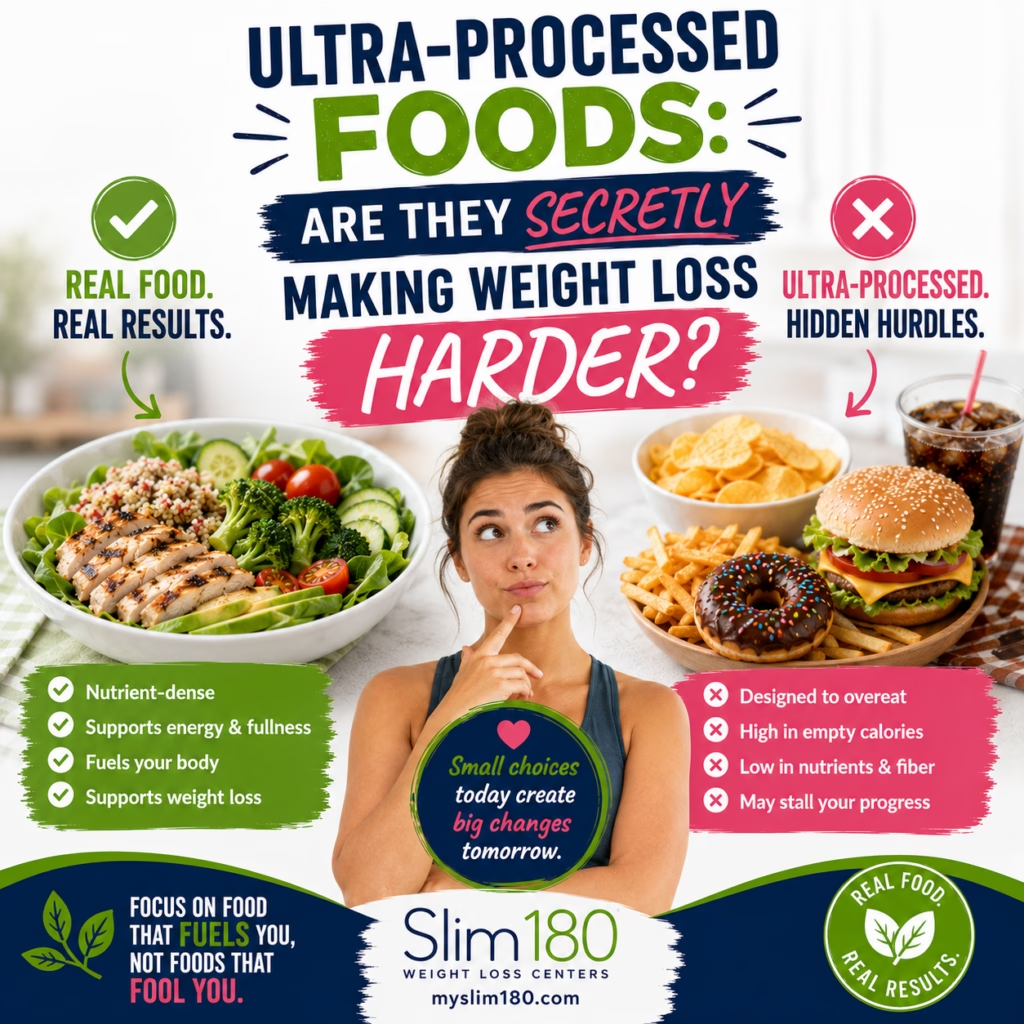
You’re watching your portions. You’re trying to make healthier choices. You’re even skipping the drive-thru more often.
So why does losing weight still feel so difficult?
One possible piece of the puzzle may be hiding in your pantry, refrigerator, and even some foods marketed as “healthy.”
We’re talking about ultra-processed foods.
These foods have become a major part of the American diet, and research suggests that diets high in ultra-processed foods may make it easier to consume more calories—sometimes without realizing it.
The good news? You don’t have to throw away everything in your kitchen or eat nothing but chicken and broccoli.
Understanding what you’re eating—and making a few strategic swaps—can make healthy eating much easier.
First: Processed Doesn’t Automatically Mean Bad
Almost everything we eat has been processed in some way.
Frozen vegetables are processed. Greek yogurt is processed. Canned tuna is processed. Oatmeal is processed.
Processing can include freezing, cooking, pasteurizing, drying, chopping or canning.
So the goal isn’t to eliminate all processed foods.
The bigger distinction is between foods that are minimally processed and foods that have been ultra-processed.
The NOVA food-classification system divides foods according to their degree and purpose of processing. Ultra-processed foods generally contain industrial formulations and ingredients such as flavors, colors, emulsifiers, sweeteners and other additives that wouldn’t typically be used when preparing food at home.
What Are Ultra-Processed Foods?
Common examples can include:
- Soda and sugary beverages
- Chips and cheese puffs
- Packaged cookies and pastries
- Candy
- Some sweetened breakfast cereals
- Many frozen ready-to-eat meals
- Hot dogs and some processed meats
- Packaged snack cakes
- Certain snack and granola bars
- Instant noodles and soups
- Some highly formulated breads and baked goods
But here’s where it gets tricky:
A food coming in a box, bag or package doesn’t automatically make it unhealthy.
Some whole-grain breads, cereals and other packaged foods may technically meet definitions of ultra-processed while still providing valuable nutrients such as fiber, vitamins and minerals. That’s one reason nutrition experts caution against judging a food solely by its processing classification.
So What Does This Have to Do With Weight Loss?
Quite a bit.
One fascinating NIH-controlled study compared what happened when adults were offered an ultra-processed diet versus an unprocessed diet.
Participants were allowed to eat as much or as little as they wanted.
The meals presented during the two diets were matched for calories, sugar, fiber, fat and carbohydrates.
Yet something surprising happened.
When participants ate the ultra-processed diet, they consumed about 500 MORE calories per day.
They also ate faster.
During two weeks on the ultra-processed diet, participants gained an average of approximately 2 pounds.
During the two weeks eating the unprocessed diet, they lost approximately 2 pounds.
That’s a pretty powerful reminder:
Sometimes weight loss isn’t only about how much food is sitting on your plate.
The type of food may influence how easy it is to eat more than your body needs.
Why Can Ultra-Processed Foods Be So Easy to Overeat?
Think about the difference between eating a baked potato and eating potato chips.
You might comfortably eat one potato.
But sitting in front of the television with a bag of chips?
Suddenly half the bag can disappear.
Many ultra-processed foods are designed to be extremely convenient and highly palatable. They can also be easy to eat quickly, and some tend to provide lots of calories without much fiber or nutritional value.
And when you’re trying to lose weight, those extra bites can add up.
You may not feel like you’re eating “a lot,” yet your total calorie intake can be much higher than you realize.
The “Healthy” Food Trap
Ultra-processed doesn’t always look like junk food.
Some foods wear a health halo.
You might see words like:
Natural.
Low-fat.
High-protein.
Made with whole grains.
Organic.
Gluten-free.
No added sugar.
Those claims don’t automatically tell you the entire nutritional story.
Some flavored yogurts, breakfast cereals, snack bars, juices, crackers, condiments and other foods marketed as healthy can still be highly processed.
That’s why it’s worth turning the package around.
Start Looking at the Whole Food—Not Just the Marketing
Instead of obsessing over whether every ingredient is “good” or “bad,” ask yourself:
Does this food give my body something useful?
Look for foods that help provide:
Protein — helps support muscle and can contribute to fullness.
Fiber — helps with fullness and digestive health.
Produce — vegetables and fruits provide fiber, vitamins, minerals and volume.
Nutrient density — getting more nutritional value for the calories you’re consuming.
A packaged food can absolutely fit into a healthy weight-loss plan.
The bigger goal is making sure highly processed convenience foods aren’t crowding out the foods your body needs.
5 Simple Swaps You Can Try
You don’t need to completely overhaul your diet tomorrow.
Start small.
Instead of: Sugary breakfast cereal
Try: Eggs, Greek yogurt or oatmeal with berries.
Instead of: Chips with lunch
Try: Crunchy vegetables, fruit or another fiber-rich side.
Instead of: A pastry for breakfast
Try: Greek yogurt with berries and a small amount of nuts.
Instead of: Sugary beverages
Try: Water, sparkling water or another low- or no-sugar option.
Instead of: A frozen entrée with little protein or produce
Try: Build a simple plate with lean protein + vegetables + a portion-controlled carbohydrate.
These aren’t rules.
They’re simply opportunities to improve the nutritional quality of your day.
Try the 80/20 Mindset
You don’t need to swear off pizza, cookies or chips forever.
That’s usually not realistic—and sustainable weight loss shouldn’t require perfection.
Instead, think about what makes up the majority of your diet.
Aim for most of your meals to revolve around foods such as:
Lean proteins, vegetables, fruits, eggs, Greek yogurt, beans, seafood, poultry, whole grains and other nutrient-dense foods.
Then leave some room for the foods you simply enjoy.
Consistency beats perfection.
A Simple Challenge for This Week
Take a look at what you normally eat during an average day.
Don’t judge it.
Just look.
Ask yourself:
Where could I replace ONE ultra-processed food with something closer to its original form?
Maybe breakfast.
Maybe your afternoon snack.
Maybe the food you reach for while watching television at night.
Change one thing.
Once that feels normal, change another.
Small improvements repeated consistently can become completely different eating habits over time.
The Bottom Line
Ultra-processed foods aren’t something you need to fear.
And eating one cookie isn’t what prevents someone from losing weight.
But when ultra-processed foods make up a large portion of your daily diet, they may make it easier to consume more calories than you realize.
Research gives us an important clue: in a tightly controlled NIH experiment, people spontaneously ate about 500 additional calories per day when eating an ultra-processed diet compared with an unprocessed one.
So instead of asking:
“What foods do I need to completely eliminate?”
Try asking:
“What foods could I eat MORE of that make reaching my goals easier?”
More protein.
More vegetables.
More fiber.
More whole and minimally processed foods.
More meals that leave you feeling satisfied.
And fewer foods that leave you wondering how the whole bag disappeared.
Weight loss doesn’t have to be about eating perfectly. It’s about creating better habits you can actually live with.
