
Longevity Over Rapid Weight Loss: Building a Healthier Body for the Long Run
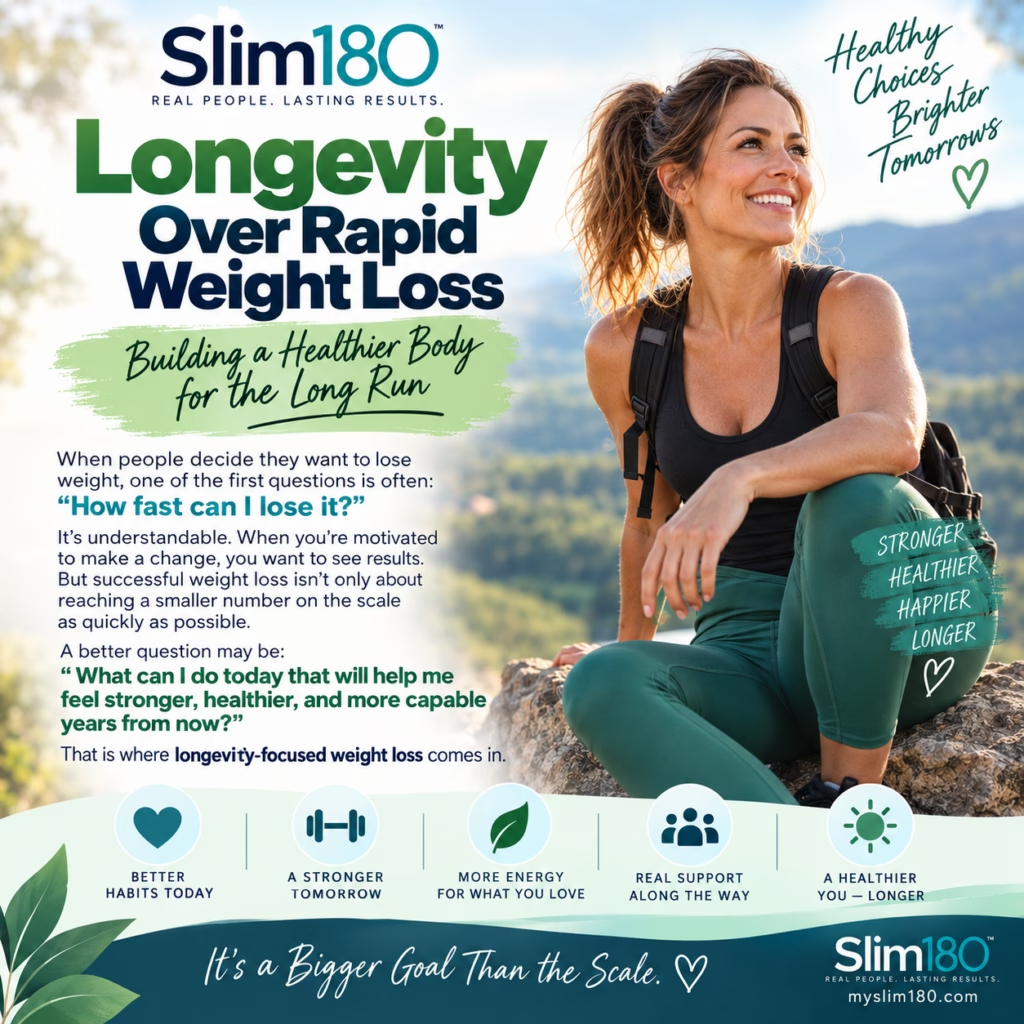
When people decide they want to lose weight, one of the first questions is often:
“How fast can I lose it?”
It’s understandable. When you’re motivated to make a change, you want to see results. But successful weight loss isn’t only about reaching a smaller number on the scale as quickly as possible.
A better question may be:
“What can I do today that will help me feel stronger, healthier, and more capable years from now?”
That is where longevity-focused weight loss comes in.
At Slim180, we believe weight loss should be about more than simply losing pounds. The bigger goal is creating habits that support your metabolic health, muscle, energy, mobility, and overall health span—the years of life you spend feeling healthy and functioning well.
Health Span Matters, Not Just Life Span
Living longer is one thing.
Living longer while remaining active, independent, energetic, and able to enjoy your life is another.
That’s the idea behind health span.
Instead of focusing exclusively on how many years you live, health span considers how many of those years are spent in good health.
Nutrition, physical activity, maintaining muscle, sleep, stress management, and metabolic health can all play important roles.
And that means the choices you’re making during your weight-loss journey aren’t only about fitting into smaller clothes.
You’re investing in your future body.
The Problem With the “Lose It as Fast as Possible” Mentality
Fast results can feel exciting.
But when rapid weight loss depends on extreme calorie restriction, eliminating entire categories of food unnecessarily, skipping meals, or following a plan that could never realistically become part of everyday life, maintaining those results can become difficult.
You may lose weight—but you haven’t necessarily learned how to live at your new weight.
That’s an important distinction.
A successful weight-loss program shouldn’t simply teach you how to diet.
It should help teach you how to eat.
That includes learning how to navigate:
- Restaurants
- Vacations
- Holidays
- Weekends
- Stressful days
- Busy schedules
- Social events
- Cravings
- Changes in appetite
- Weight fluctuations
- Maintenance
Because eventually, real life happens.
The goal isn’t to become perfect at dieting. It’s to become skilled at taking care of yourself.
Protect Your Muscle While Losing Fat
One of the biggest reasons to think beyond the scale is muscle.
When losing weight, the goal generally isn’t simply to make your body smaller.
Ideally, you want to reduce excess body fat while preserving as much lean mass as reasonably possible.
Muscle becomes especially important as we get older because it supports:
Strength. Mobility. Balance. Independence. Metabolic health. Physical function.
This is why your weight-loss strategy shouldn’t revolve around eating as little as humanly possible.
Instead, your plan may include appropriate nutrition, adequate protein, and resistance exercise based on your individual needs and abilities.
Don’t just ask, “How much weight did I lose?”
Ask:
“What am I doing to protect the body underneath the weight?”
Exercise Isn’t Just About Burning Calories
For years, exercise and weight loss have often been reduced to a simple equation:
Eat calories. Burn calories.
But movement provides benefits far beyond the calories burned during a workout.
Regular physical activity can support cardiovascular fitness, strength, mobility, insulin sensitivity, mood, sleep, bone health, and the ability to perform everyday activities.
Instead of thinking:
“I need to exercise because I ate too much.”
Try thinking:
“I exercise because I want my body to work well for a long time.”
That’s an entirely different relationship with movement.
Walking matters.
Strength training matters.
Mobility matters.
Cardiovascular fitness matters.
And you don’t need to become an extreme athlete to benefit from becoming more active.
Consistency beats punishment.
Eat to Support Your Metabolism—not Punish Your Body
Food shouldn’t become the enemy simply because you’re trying to lose weight.
Your body still needs nutrition.
A longevity-focused eating pattern generally emphasizes foods that provide nutrients and help you feel satisfied, such as:
Protein: Helps support muscle and fullness.
Fiber-rich foods: Can support digestive health, fullness, and overall metabolic health.
Fruits and vegetables: Provide vitamins, minerals, fiber, and beneficial plant compounds.
Healthy fats: Important for normal body functions and can contribute to satisfying meals.
Minimally processed foods: Can make it easier to build nutrient-dense meals while still leaving room for flexibility.
And yes—you can still enjoy food.
A sustainable approach doesn’t require every meal to be perfect.
Your overall pattern matters more than one dinner, one dessert, one vacation, or one weekend.
Stop Treating the Scale Like a Daily Report Card
The scale can provide useful information.
But it doesn’t tell the entire story.
Body weight naturally fluctuates because of hydration, sodium, carbohydrate intake, digestion, hormones, and other factors.
That means a higher number tomorrow doesn’t automatically mean today’s choices “didn’t work.”
Look at your trend over time rather than emotionally reacting to every individual weigh-in.
And pay attention to other victories:
- Are you getting stronger?
- Is walking easier?
- Do you have more energy?
- Are your clothes fitting differently?
- Are you making better food choices automatically?
- Are you recovering from an indulgent meal without turning it into an indulgent week?
- Are you developing habits you can actually maintain?
Those are signs of progress too.
Your Goal Weight Isn’t the Finish Line
This may be one of the most important mindset changes you can make.
Reaching your goal weight isn’t the end of your journey.
It’s the beginning of maintenance.
If you use an extremely restrictive approach that you cannot imagine continuing in some form after reaching your goal, ask yourself:
“What happens when the diet ends?”
Long-term weight management requires a transition from actively losing weight to living a lifestyle that supports your new weight and your health.
The habits you practice while losing weight are essentially training for maintenance.
That’s why sustainable habits matter so much.
Think About the 70-Year-Old Version of You
Here’s a different way to look at today’s choices.
Imagine yourself years from now.
What would you want that version of yourself to be able to do?
Travel?
Play with grandchildren?
Carry groceries?
Climb stairs?
Work in the garden?
Take long walks?
Get up from the floor easily?
Continue doing the hobbies you love?
Live independently?
Your choices today can help support that future.
Suddenly, eating protein isn’t simply about hitting a diet target.
Strength training isn’t simply about burning calories.
Walking isn’t simply about earning dinner.
Sleeping well isn’t laziness.
And maintaining a healthy weight isn’t simply about appearance.
You’re building a body you hope will carry you through decades of life.
Slow Progress Is Still Progress
There will always be another diet promising dramatic results.
But your health isn’t a 30-day challenge.
You’re going to live in your body for the rest of your life.
You don’t need to win a race against someone else’s transformation photos.
You don’t need every week to produce a dramatic number on the scale.
And you certainly don’t need to punish yourself into becoming healthier.
Focus on building repeatable behaviors:
Eat nourishing food most of the time.
Prioritize protein and nutrient-dense foods.
Build and protect muscle.
Move your body regularly.
Get adequate sleep.
Manage stress.
Stay hydrated.
Enjoy your life.
Keep going.
Because the most powerful weight-loss plan isn’t necessarily the one that produces the fastest transformation.
It’s the one that helps you create results you can actually live with.
The Slim180 Approach: Lose Weight for the Life You’re Building
At Slim180, we want our clients to look beyond the next weigh-in.
Yes, we celebrate pounds lost.
But we also celebrate the client who starts walking every evening.
The person who chooses protein without having to think about it.
The client who goes out to dinner and doesn’t feel like they “ruined everything.”
The person who becomes stronger.
The client who learns how to recover from a difficult week instead of quitting.
And the person who reaches their goal and knows how to keep moving forward.
Because weight loss isn’t simply about becoming less.
Less weight.
Less body fat.
Less discomfort.
It can also be about becoming more.
More energetic.
More capable.
More confident in your choices.
More physically active.
More resilient.
More prepared for the years ahead.
Don’t just lose weight for next month.
Build your health for the next decade—and the decades after that.
Individual weight-loss needs and appropriate rates of weight loss vary. People with medical conditions, those taking medications, or those considering significant dietary or exercise changes should discuss an appropriate plan with their healthcare provider.
