
How to Build a Weight-Loss-Friendly Kitchen: The Slim180 Fridge, Freezer & Pantry Makeover
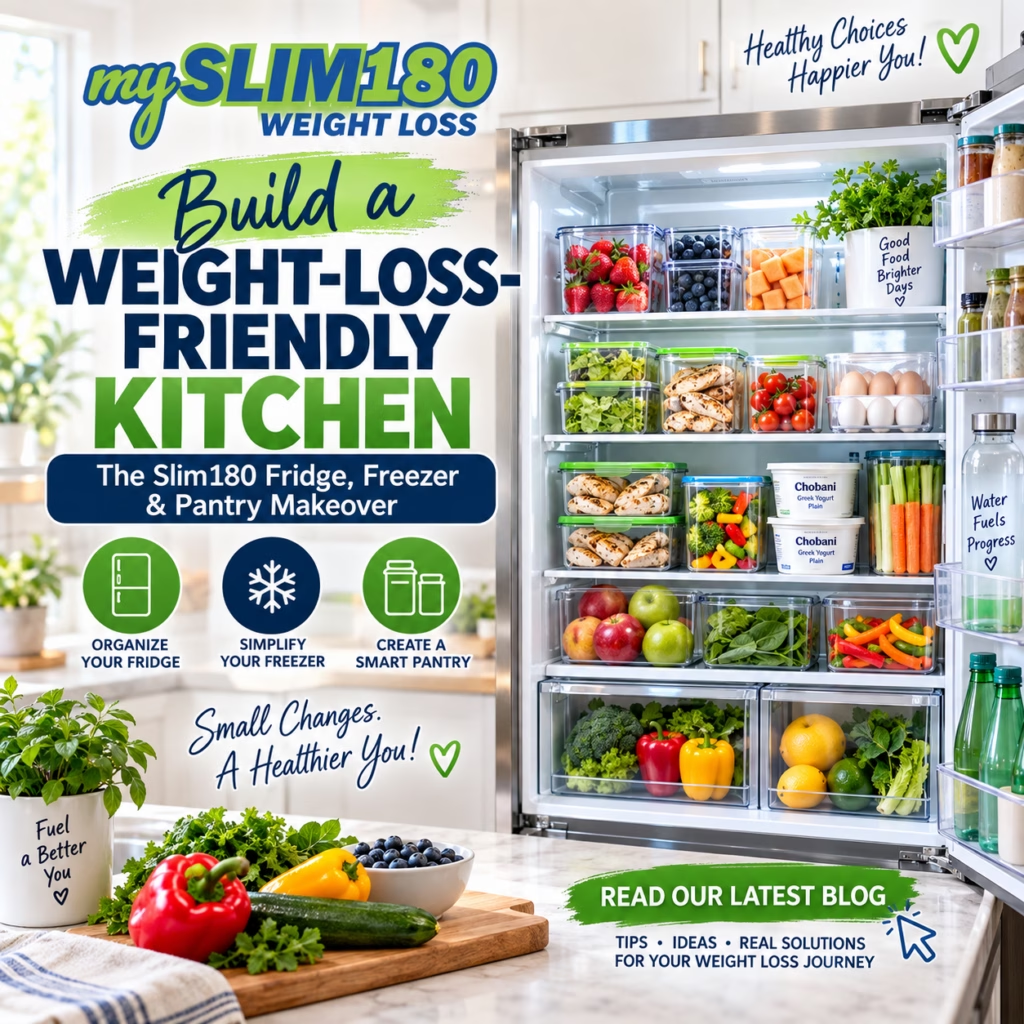
You made your grocery list, you went to the store, you filled your cart with proteins, vegetables, fruits and other foods that support your weight-loss goals.
Then you came home and put everything away.
Now what?
Buying healthier foods is a great start, but what happens once those groceries enter your kitchen can make a big difference in how easy—or difficult—it feels to stay consistent.
Think about those moments when you’re tired, hungry and standing in front of the refrigerator wondering what to eat. You’re probably not interested in washing vegetables, thawing chicken and creating a beautiful healthy meal from scratch.
You want something now.
That’s why creating a weight-loss-friendly kitchen isn’t about having a picture-perfect refrigerator or throwing away every food that doesn’t fit your plan. It’s about setting up your environment so that the choices that support your goals are visible, convenient and easy to grab.
Let’s give your fridge, freezer and pantry a Slim180 makeover.
Your Kitchen Can Work With You—or Against You
We tend to think successful weight loss comes down to making good decisions.
But how many decisions do you make about food every day?
What should I have for breakfast?
What am I taking for lunch?
Should I have a snack?
What’s for dinner?
Do I feel like cooking?
What’s fastest?
And then there’s the classic question:
“What do we have to eat?”
The more preparation required when you’re already hungry, tired or busy, the easier it can be to reach for whatever is quickest.
That’s where your kitchen setup becomes important.
Instead of relying on motivation every time you eat, create an environment that makes your planned choices easier.
1. Follow the Eye-Level Rule
Open your refrigerator.
What do you see first?
Those foods have a major advantage simply because they’re visible.
Instead of hiding your most useful foods in the back of the refrigerator or buried underneath everything else, give them prime real estate.
Keep foods that support your plan where they’re easy to see and reach, such as:
- Prepared lean proteins
- Washed and portioned vegetables
- Fresh fruit
- Greek yogurt
- Hard-boiled eggs
- Pre-portioned snacks
- Water and unsweetened beverages
- Leftovers you’ve already designated for another meal
You don’t necessarily need a refrigerator that looks like it belongs on social media.
You need a refrigerator that helps you answer “What can I eat?” quickly.
2. Create a Grab-and-Go Protein Zone
One of the easiest changes you can make is dedicating one area of your refrigerator to quick protein choices.
Protein can help with fullness and is an important part of preserving lean body mass during weight loss.
Depending on your individual food plan, your protein zone might include things like cooked chicken breast, hard-boiled eggs, Greek yogurt, cottage cheese, prepared lean meat or other approved protein options.
The goal is simple:
When hunger hits, you shouldn’t have to cook before you can make a good choice.
After cooking dinner, consider preparing an extra portion of protein for tomorrow.
Grilling chicken? Make a little extra.
Preparing lean ground meat? Save a portion.
Boiling eggs? Make several.
A few extra minutes today can make tomorrow much easier.
3. Prep Ingredients Instead of Preparing Seven Identical Meals
When people hear “meal prep,” they sometimes imagine spending their entire Sunday cooking and filling a refrigerator with identical containers.
That works for some people.
But it certainly isn’t the only way to meal prep.
Try ingredient prep instead.
Prepare several basic foods that you can combine differently throughout the week.
For example:
Protein: Cook chicken or another lean protein.
Vegetables: Wash, chop and portion vegetables.
Fruit: Wash fruit and place it somewhere visible.
Starches: Portion appropriate starch choices according to your plan.
Now you have building blocks.
Chicken can become one meal with vegetables tonight and something completely different tomorrow.
This gives you structure without making you feel like you’re eating the same meal over and over.
4. Give Your Freezer a Purpose
Your freezer can be one of your best weight-loss tools.
Unfortunately, it’s also where leftovers sometimes go to disappear forever.
Instead, turn part of your freezer into your backup meal department.
Keep several quick meal components available for the nights when life doesn’t go according to plan.
Frozen vegetables can be especially convenient because they require little preparation and last much longer than fresh produce.
You might also freeze individually portioned cooked proteins or appropriate leftovers.
Label containers with the food and date whenever possible.
The objective is to be able to open the freezer and immediately identify something that can become dinner.
5. Everyone Needs an Emergency Meal
There will eventually be a night when dinner doesn’t happen as planned.
You get home late.
You forgot to thaw the chicken.
The kids have activities.
You’re exhausted.
You don’t want to cook.
These are the moments when an emergency meal can save the day.
An emergency meal is simply a meal that fits your plan and can be put together quickly using foods you intentionally keep available.
Ideally, create two or three emergency meal combinations that you can prepare in approximately 10 minutes.
Write them down.
Keep the ingredients stocked.
Then when you’re tired and tempted to say, “Forget it, let’s order something,” you already have another option.
Your emergency dinner doesn’t need to be exciting.
It just needs to be there when you need it.
6. Give Leftovers a Job
How often does this happen?
You finish dinner, put the leftovers into a container and slide them into the refrigerator.
Three days later you find them behind something else and wonder:
“When did we make this?”
Instead, give leftovers a job before you put them away.
Ask:
Is this tomorrow’s lunch?
Is this another dinner?
Should I freeze it?
Then portion and store it accordingly.
If tomorrow’s lunch is already packed while you’re cleaning up dinner, that’s one less decision you’ll have to make tomorrow.
7. Create an “EAT ME FIRST” Section
This may become your favorite refrigerator trick.
Designate a small container, basket or refrigerator section as:
EAT ME FIRST
This is where you put foods that need to be eaten soon.
Maybe you have strawberries that are getting ripe.
Perhaps half a container of vegetables is left from dinner.
Maybe there’s one serving of chicken from yesterday.
Put those foods together where you can see them.
Before preparing something new, check your EAT ME FIRST section.
This can help reduce food waste while making healthy choices more convenient.
8. Organize Your Pantry Around Decisions
Your pantry doesn’t have to be perfectly organized with matching containers and handwritten labels.
It simply needs to make sense.
Instead of putting everything wherever it fits, consider creating basic zones.
You might have areas for:
Meal ingredients
Planned snacks
Grab-and-go choices
Breakfast foods
Backup meals
Slim180 products
When you need something quickly, you know where to look.
That matters because convenience isn’t just about what food you have.
It’s about how quickly you can find it.
9. Think About Where You Keep Trigger Foods
Most of us have certain foods that are harder to ignore once we see them.
Possibly it’s candy.
Maybe it’s chips.
Perhaps it’s cookies sitting on the kitchen counter.
You don’t necessarily have to ban every tempting food from your house.
But you also don’t have to give it a starring role.
If seeing a particular food every time you walk through the kitchen makes you want it, consider moving it somewhere less visible.
Put foods you want to eat more often in the easiest places to see and reach.
Move foods you want to eat less frequently somewhere that requires a little more intention.
Sometimes changing your environment is easier than asking yourself to say “no” twenty times a day.
10. Make Healthy Food Truly Convenient
Buying vegetables doesn’t make them convenient.
Neither does buying fruit.
When you get home from the grocery store—or when you have a few minutes later that day—do a little preparation.
Wash what can safely be washed ahead of time.
Chop vegetables.
Portion foods.
Prepare protein.
Move foods into containers that make them easy to grab.
If it takes 30 seconds to grab something that supports your plan but 10 minutes to prepare it, guess which version you’re more likely to choose on a busy afternoon?
Make convenience work in your favor.
11. Keep a 5-Minute Food Rescue List on Your Refrigerator
Here’s a simple Slim180 strategy:
Write down five quick food combinations that fit your individual plan and put the list on your refrigerator.
These aren’t gourmet meals.
They’re your:
“I DON’T KNOW WHAT TO EAT” MEALS.
When you’re hungry and your brain isn’t interested in planning dinner, look at the list.
Choose one.
This eliminates the decision-making process during one of the hardest times to make a thoughtful food choice—when you’re already hungry.
12. Do a 10-Minute Weekly Kitchen Reset
Once a week, spend approximately 10 minutes resetting your kitchen.
Open your refrigerator, freezer and pantry and ask:
What needs to be eaten first?
Do I have quick proteins available?
What produce needs to be used?
Do I have emergency meals?
Are there leftovers I should freeze?
What am I running low on?
What can I prep now to make tomorrow easier?
Move older foods toward the front.
Restock your grab-and-go area.
Check your freezer.
Clean out anything that’s expired or no longer good.
Ten minutes isn’t much time, but it can make the next several days considerably easier.
Your Kitchen Doesn’t Have to Be Perfect
A weight-loss-friendly kitchen doesn’t require matching containers, elaborate meal prep or hours of organization.
It requires something much simpler:
A kitchen designed for your real life.
Are mornings hectic? Make breakfast easier.
If afternoons are when you struggle with hunger, have an appropriate snack ready.
Does dinner fall apart every Wednesday because your schedule is packed? Make Wednesday an emergency-meal night.
Do you feel exhausted after work? Don’t create a food plan that requires you to spend an hour cooking every evening.
Successful weight loss isn’t about creating the perfect environment.
It’s about removing some of the little obstacles that make consistency harder.
Make the Better Choice the Easier Choice
One of the most helpful questions you can ask when organizing your kitchen is:
“What choice do I want to make easier?”
Then work backward.
If you want to eat more vegetables, make them visible and ready to use.
If you want to eat enough protein, keep quick protein choices available.
If you want to stop ordering takeout on busy nights, keep emergency meals on hand.
If you want to snack less impulsively, reconsider what’s sitting on the counter.
If you want to stop wasting healthy groceries, create an EAT ME FIRST section.
Small changes to your environment can remove friction from your daily routine.
And when the choice that supports your goals becomes the convenient choice, staying consistent can become much easier.
Slim180 Can Help You Build a Plan for Real Life
At Slim180 Weight Loss, we know that successful weight loss isn’t simply about knowing which foods are “good” or “bad.”
It’s about learning how to make healthier choices work within your life, your schedule and your goals.
Our personalized approach can include nutritional guidance, one-on-one support and weight-loss options tailored to your individual needs.
Because the best weight-loss plan isn’t the one that’s perfect on paper.
It’s the one you can actually live with.
Ready to get started?
Schedule your FREE Slim180 Weight Loss consultation today and let us help you create a personalized plan for lasting success.
