
Fat Loss vs. Muscle Loss: Why the Number on the Scale Doesn’t Tell the Whole Story
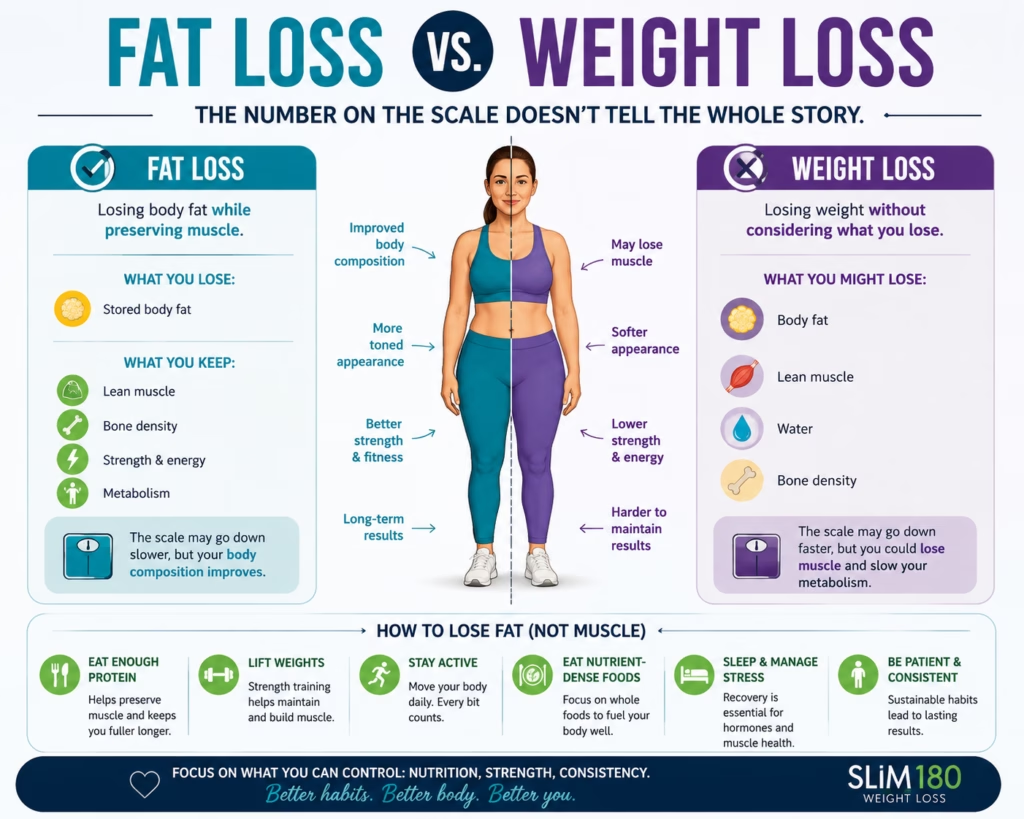
When you’re trying to lose weight, seeing the number on the scale go down can feel like the ultimate sign of success.
But here’s an important question:
What are you actually losing?
When body weight decreases, the weight lost isn’t necessarily all body fat. Depending on your nutrition, activity level, rate of weight loss and other factors, some of that weight may also come from water and lean body mass, including muscle.
That’s why successful weight loss shouldn’t always be about getting the scale to move as quickly as possible.
The better goal is often:
Lose body fat while preserving as much muscle as possible.
Weight Loss and Fat Loss Aren’t Exactly the Same
We often use the terms weight loss and fat loss interchangeably, but they aren’t identical.
Weight loss simply means your total body weight decreased.
That change can include:
- Body fat
- Water
- Glycogen, the carbohydrate stored in your muscles and liver
- Digestive contents
- Lean tissue, including muscle
Fat loss, on the other hand, specifically refers to reducing stored body fat.
So when your scale says you’re down five pounds, it doesn’t automatically mean you’ve lost five pounds of fat.
This is also why the scale can sometimes be misleading in the opposite direction.
You may be making progress with fat loss while your weight temporarily stays the same because of changes in water, digestion, glycogen or body composition.
Why Should You Care About Preserving Muscle?
Muscle isn’t just about looking toned.
Maintaining muscle is important for strength, mobility, physical function and healthy aging. Lean tissue also contributes to the energy your body uses each day.
Preserving muscle becomes especially important as we get older because adults naturally tend to lose muscle with age.
So if you’re intentionally losing weight, you generally don’t want to unnecessarily accelerate that process.
Think about the difference between these two goals:
Goal #1: “I want to lose 30 pounds.”
versus:
Goal #2: “I want to reduce body fat, maintain strength and create a healthier body composition.”
The scale may be part of measuring both goals, but the second gives you a much bigger picture of success.
Can You Lose Muscle While Losing Weight?
Yes.
When your body is in a calorie deficit, it needs to obtain energy from somewhere.
Ideally, much of that energy comes from stored body fat. But lean tissue can also be lost during weight reduction.
Several factors may influence how much lean mass you maintain, including your protein intake, resistance exercise, starting body composition, age, rate of weight loss and overall nutrition.
This is one reason an extremely restrictive approach isn’t necessarily a better approach simply because the scale moves faster.
Faster weight loss isn’t automatically better-quality weight loss.
What About Muscle Loss on GLP-1 Medications?
This has become an especially important conversation with medications such as semaglutide and tirzepatide.
GLP-1–based medications can significantly reduce appetite for some people.
That can help create the calorie deficit necessary for weight loss—but it can also create a new challenge:
You may not feel like eating very much.
If you’re eating considerably less food, it becomes important to pay attention to the quality of the food you are eating.
Simply eating as little as possible because you aren’t hungry shouldn’t be the goal.
Adequate nutrition, protein and appropriate physical activity remain important during medically supported weight loss.
The medication may help you eat less.
Your weight-loss strategy should help you eat well.
6 Ways to Help Preserve Muscle While Losing Fat
1. Make Protein a Priority
Protein provides amino acids your body uses to build and maintain muscle tissue.
When you’re losing weight, protein becomes particularly important.
Instead of thinking about protein only at dinner, consider incorporating an appropriate protein source throughout your day.
Depending on your preferences and individual plan, options might include:
- Eggs
- Greek yogurt
- Cottage cheese
- Chicken
- Turkey
- Fish and seafood
- Lean beef
- Tofu
- Beans and legumes
- Protein shakes or other protein-rich options when appropriate
Your individual protein needs can vary, so there isn’t one perfect amount for everyone.
2. Add Resistance Training
Cardio can be excellent for cardiovascular health and increasing activity, but don’t overlook strength training.
Resistance exercise sends your body an important signal:
We still need this muscle.
Strength training doesn’t necessarily mean becoming a bodybuilder or spending hours in a gym.
Depending on your ability and medical situation, resistance exercise might include weights, resistance bands, machines or body-weight movements.
Even a relatively simple routine performed consistently can be meaningful.
3. Don’t Chase the Fastest Possible Weight Loss
It’s tempting to think:
If losing two pounds is good, losing five must be better.
Not necessarily.
Weight-loss rate can vary considerably from person to person, particularly when someone first begins a program.
The goal shouldn’t simply be to make the scale fall as rapidly as possible.
You want a plan that also supports nutrition, strength and long-term success.
4. Don’t Let Low Appetite Turn Into Poor Nutrition
This is especially important for people taking GLP-1 medications.
When you’re rarely hungry, it’s easy to accidentally skip meals or eat very little protein.
Instead of waiting until you’re extremely hungry, you may benefit from having a basic nutrition plan for your day.
When portions are smaller, ask:
What nutrients am I getting from the food I am eating?
5. Stay Active Outside the Gym
Strength training is valuable, but everyday movement matters too.
Walking, taking stairs, doing household activities, gardening and simply spending less time sitting can all contribute to an active lifestyle.
Think beyond “exercise.”
Think:
How can I keep my body moving?
6. Look Beyond the Scale
The scale is useful—but it shouldn’t be your only measurement of progress.
Also pay attention to things such as:
- How your clothes fit
- Waist and body measurements
- Strength
- Energy
- Endurance
- Mobility
- Progress photos
- How easily you perform everyday activities
- Changes in body composition when appropriate
Sometimes your body is changing even when the scale isn’t giving you the validation you expected.
Signs You May Need to Look More Closely at Muscle Preservation
Muscle loss isn’t something you can accurately diagnose just by looking in the mirror, but certain changes may be worth discussing with your healthcare provider or weight-loss team.
For example, you may notice that you’re:
- Becoming noticeably weaker
- Struggling with activities that used to feel easy
- Losing weight very rapidly
- Eating very little protein
- Frequently skipping meals because you aren’t hungry
- Feeling unusually fatigued
- Losing significant weight without doing any resistance exercise
These don’t automatically mean you’re losing excessive muscle, but they can be good reasons to reassess your plan.
Don’t Be Afraid of Strength Training Because You Want the Scale to Drop
Some people avoid resistance training because they’re worried that gaining muscle will prevent them from losing weight.
But remember the bigger goal.
You aren’t trying to win a contest for the lowest possible number on the scale.
You’re trying to improve your health and body composition.
Imagine two people who both weigh exactly the same but have very different amounts of body fat and lean tissue.
The scale sees the same number.
Their bodies aren’t necessarily the same.
That’s why body weight is only one piece of information.
The Scale Isn’t the Enemy—It’s Just Incomplete
You don’t need to throw away your scale.
Just stop asking it to tell you something it can’t.
A scale tells you:
How much do I weigh today?
It doesn’t independently tell you:
How much fat did I lose?
Did I preserve muscle?
Am I stronger?
Are my habits improving?
Is my health improving?
Can I maintain what I’m doing?
Those questions require looking at the bigger picture.
Better Weight Loss Is About What You Keep, Too
When people begin a weight-loss program, the focus is understandably on what they want to lose.
Pounds.
Inches.
Body fat.
But there’s another side of the equation.
Think about what you want to keep:
Muscle. Strength. Energy. Confidence. Healthy habits.
At Slim180 Weight Loss, our goal is to help clients look beyond simply making the scale move.
Whether you’re following a nutrition-based weight-loss program or using medically supported options such as semaglutide or tirzepatide, your nutrition, protein intake, activity and long-term habits still matter.
Because successful weight loss isn’t simply about becoming lighter.
It’s about building a healthier body you can maintain.
Ready to Focus on Better Weight Loss?
If you’re ready to lose weight but aren’t sure which approach makes sense for you, Slim180 can help you create a personalized plan based on your goals.
Schedule a free consultation with Slim180 Weight Loss and learn more about our nutrition, coaching and medical weight-loss options.
Don’t just focus on losing pounds.
Focus on losing what you want to lose—while protecting what you want to keep.
