The 7 Most Common Weight Loss Plateau Mistakes (And How to Break Through Them)
You’ve been eating healthier, making better choices, and watching the numbers on the scale drop. Then suddenly…nothing.
The scale won’t move.
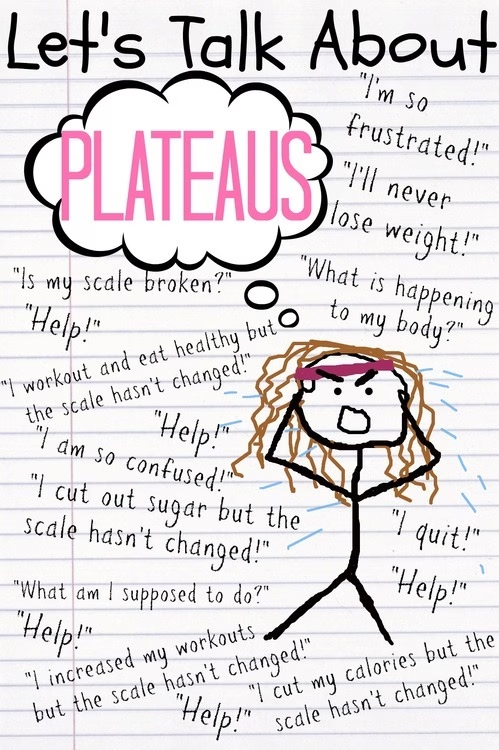
If you’ve hit a weight loss plateau, you’re not alone. Nearly everyone experiences one at some point during their journey. While it can be frustrating, a plateau doesn’t mean you’ve failed—it usually means your body needs a new strategy.
Let’s look at the seven most common reasons weight loss stalls and what you can do to get back on track.
1. You’re Eating Less Protein Than Your Body Needs
Protein is one of the most important nutrients for successful weight loss.
Not only does it help you feel full longer, but it also supports lean muscle, which plays a key role in maintaining a healthy metabolism.
Without enough protein, your body is more likely to lose muscle along with fat, making it harder to continue losing weight.
Try this:
- Include a quality protein source at every meal.
- Aim for 20–30 grams of protein per meal, or follow your provider’s recommendations.
- Choose lean meats, eggs, Greek yogurt, cottage cheese, fish, beans, or protein shakes if needed.
2. You’re Not Tracking Portion Sizes
Even healthy foods contain calories.
As time passes, it’s common for portion sizes to slowly increase without realizing it. Extra handfuls of nuts, larger servings of healthy fats, or frequent bites while cooking can add up quickly.
Try this:
- Measure portions for a few days.
- Read nutrition labels.
- Be mindful of liquid calories and snacks between meals.
Awareness—not perfection—is the goal.
3. You’re Not Strength Training
Many people rely only on cardio to lose weight.
While walking, biking, and other cardio activities are excellent for heart health and burning calories, strength training helps preserve and build lean muscle.
The more muscle you maintain, the more efficiently your body burns calories throughout the day.
Aim for:
- Strength training 2–3 times per week.
- Exercises that work all major muscle groups.
- Progressive resistance as your strength improves.
4. You’re Not Sleeping Enough
Sleep is one of the most overlooked parts of weight loss.
Poor sleep can:
- Increase hunger hormones
- Reduce fullness signals
- Lower energy levels
- Increase cravings for sugary foods
- Make healthy decisions more difficult
Adults should generally aim for 7–9 hours of quality sleep each night.
Improving your sleep may help improve your weight loss, energy, and overall wellness.
5. You’re Letting Stress Take Over
Stress affects much more than your mood.
Chronic stress can lead to:
- Emotional eating
- Increased cravings
- Lower motivation
- Reduced physical activity
- Poor sleep quality
Managing stress doesn’t require perfection.
Simple habits like walking, journaling, meditation, deep breathing, or spending time outdoors can make a meaningful difference.
6. You’ve Been Eating Too Little for Too Long
Many people assume that if eating less leads to weight loss, eating even less must work even better.
Unfortunately, that’s rarely the case.
Very low-calorie diets can lead to:
- Fatigue
- Muscle loss
- Reduced physical activity
- Increased hunger
- Difficulty maintaining healthy habits
Your metabolism naturally adapts during weight loss, so the answer isn’t always to cut more calories.
Instead, focus on balanced nutrition that supports long-term success.
(Want to learn more? Read our blog: The Truth About “Starvation Mode.”)
7. You’re Expecting the Scale to Move Every Week
One of the biggest plateau mistakes isn’t actually a nutrition mistake—it’s an expectation mistake.
Weight naturally fluctuates due to:
- Water retention
- Hormonal changes
- Sodium intake
- Exercise
- Digestion
- Stress
Sometimes your body is losing fat even when the scale doesn’t immediately reflect it.
Instead of focusing only on weight, pay attention to:
- How your clothes fit
- Body measurements
- Energy levels
- Strength improvements
- Progress photos
- Healthy habits you’ve built
These are all signs that your body is changing.
What If You’re Taking Semaglutide or Tirzepatide?
GLP-1 medications like semaglutide and tirzepatide are effective tools for weight loss, but they’re not magic.
Some people experience slower progress after several months.
Common reasons include:
- Eating too little protein
- Reduced physical activity
- Loss of muscle mass
- Inconsistent medication use
- Reaching a lower calorie requirement as body weight decreases
A plateau doesn’t necessarily mean your medication has stopped working.
Often, small adjustments to nutrition, exercise, or daily habits are enough to restart progress.
How Slim180 Helps Clients Break Through Plateaus
At Slim180 Weight Loss & Wellness, we know that every weight-loss journey has ups and downs.
That’s why we provide personalized coaching to help clients overcome obstacles before they become roadblocks.
Our programs focus on:
- Personalized nutrition guidance
- Medical weight-loss options when appropriate
- Semaglutide and tirzepatide programs
- Sustainable lifestyle changes
- Accountability and one-on-one coaching
- Long-term weight maintenance
Rather than relying on quick fixes, we help you build habits that support lasting success.
The Bottom Line
A plateau isn’t the end of your weight-loss journey—it’s simply a signal that your body may need a different approach.
Instead of becoming discouraged, take a step back and evaluate your habits.
Small changes—such as increasing protein, adding strength training, improving sleep, managing stress, or reviewing portion sizes—can make a significant difference over time.
Remember, lasting weight loss isn’t about being perfect. It’s about staying consistent and making adjustments when needed.
If you’ve hit a plateau and aren’t sure what to do next, the team at Slim180 Weight Loss & Wellness is here to help. Together, we’ll create a personalized plan to help you move forward with confidence.